
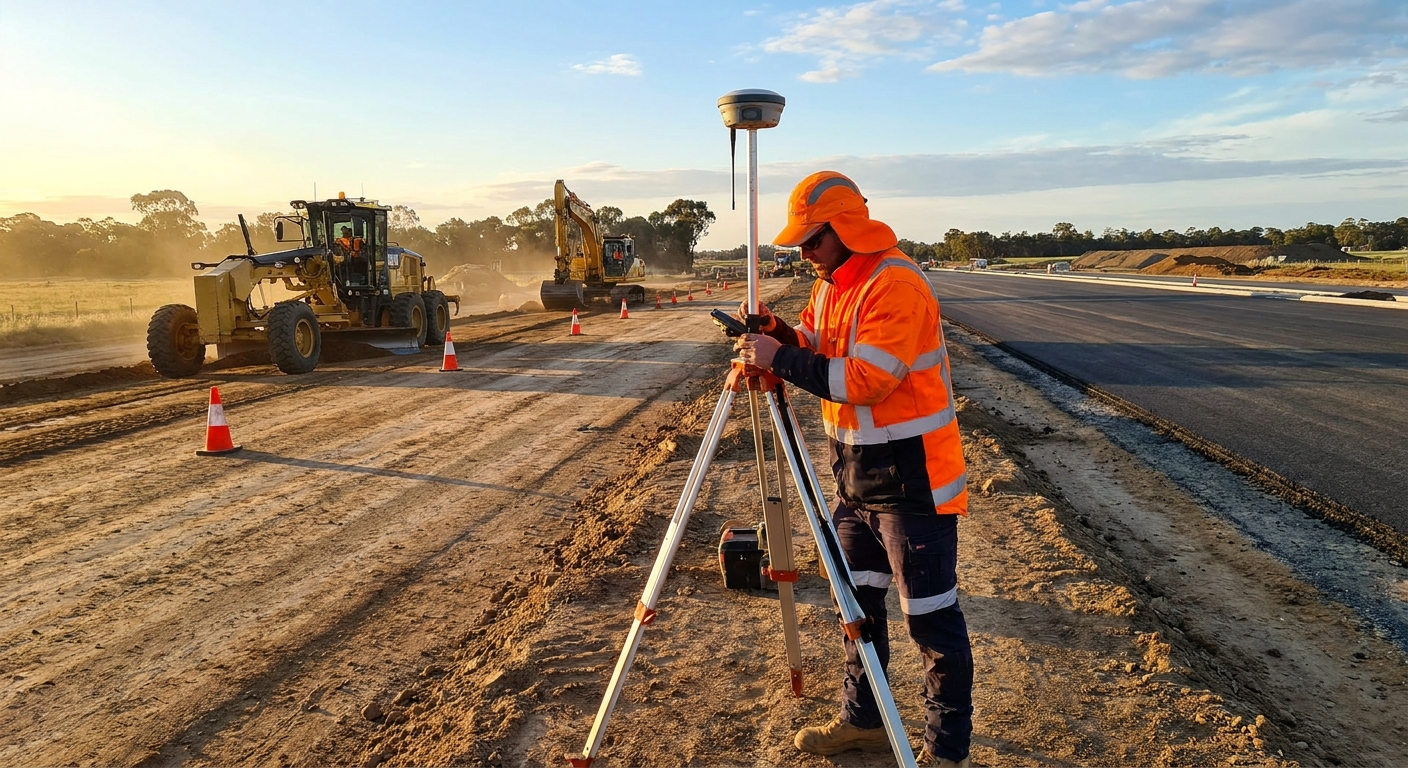
Road construction crews don't need a surveyor to set out a curb line or check a base layer grade — they need an RTK GNSS receiver for road construction that survives a jobsite and pairs with tools a non-surveyor can actually run. This guide breaks down what to look for, which picks earn a Buy, and what to skip.
- The best rtk gnss receiver for road construction replaces a €400-600/day surveyor call with in-house stakeout.
- Samsung Galaxy Tab Active 5 Pro pairs with any RTK GNSS receiver for rugged daily field use: Buy.
- UNI-Machine turns the same GNSS fix into excavator guidance for base layer and subgrade work: Buy.
- Skip base-station-only receivers and consumer tablets retrofitted with a case — road crews need daily ruggedness, not survey-shop gear.
Why this matters
Road crews that call in a surveyor pay €400 to €600 a day for stakeout and grade checks, on top of scheduling delays when nobody can show up until Thursday. marXact equipment is already running on jobsites in 40 countries at over 1,000 companies, doing that same setting-out work in-house. In 2026, the gap between "survey-grade" and "crew-operable" has mostly closed — the receiver, the tablet, and the pole matter more than a surveying licence.
The catch: not every RTK GNSS receiver and field kit combination is built for a foreman running it between compaction passes. Buy the wrong tablet or the wrong pole system and you're back to calling a surveyor by week two.
Who this is for
This guide is for road construction foremen, civil contractors and site engineers who need centimetre-accurate positions for base layer, curb and drainage stakeout, without a licensed surveyor on staff. You're comfortable with a tablet and a stakeout workflow, but you've never run a GNSS correction network and don't want a training course to start using one.
What to look for in an RTK GNSS receiver for road construction
Correction source that works without a base station
A receiver that needs its own base station on site adds setup time and one more thing to steal or knock over. NTRIP network corrections let the receiver get its fix over a mobile connection instead, which matters on a road job that shifts position every few days.
Accuracy that holds under vibration and foot traffic
Centimetre accuracy on a quiet field means nothing if the fix drifts every time a compaction roller passes 20 metres away. Road sites are noisy: moving machines, foot traffic, dust. The receiver needs to hold its fix through that, not just in a lab.
Ruggedness rated for the actual jobsite
Rain, dust, drops from pole height and temperature swings are daily events on a road build, not edge cases. A device speced for an office or a survey van doesn't survive a season of that — look for hardware you'd trust dropped in gravel.
A full workday of battery life
A mid-shift battery swap costs ten minutes and breaks concentration on a grade check. One charge should cover a full shift of stakeout and scanning, not just a morning.
A field app a non-surveyor can run in an hour
The entire point of putting an RTK GNSS receiver in a foreman's hands is skipping the surveyor. If the field software needs a training course to operate, you've bought the wrong system for this crew.
Direct handoff to the office
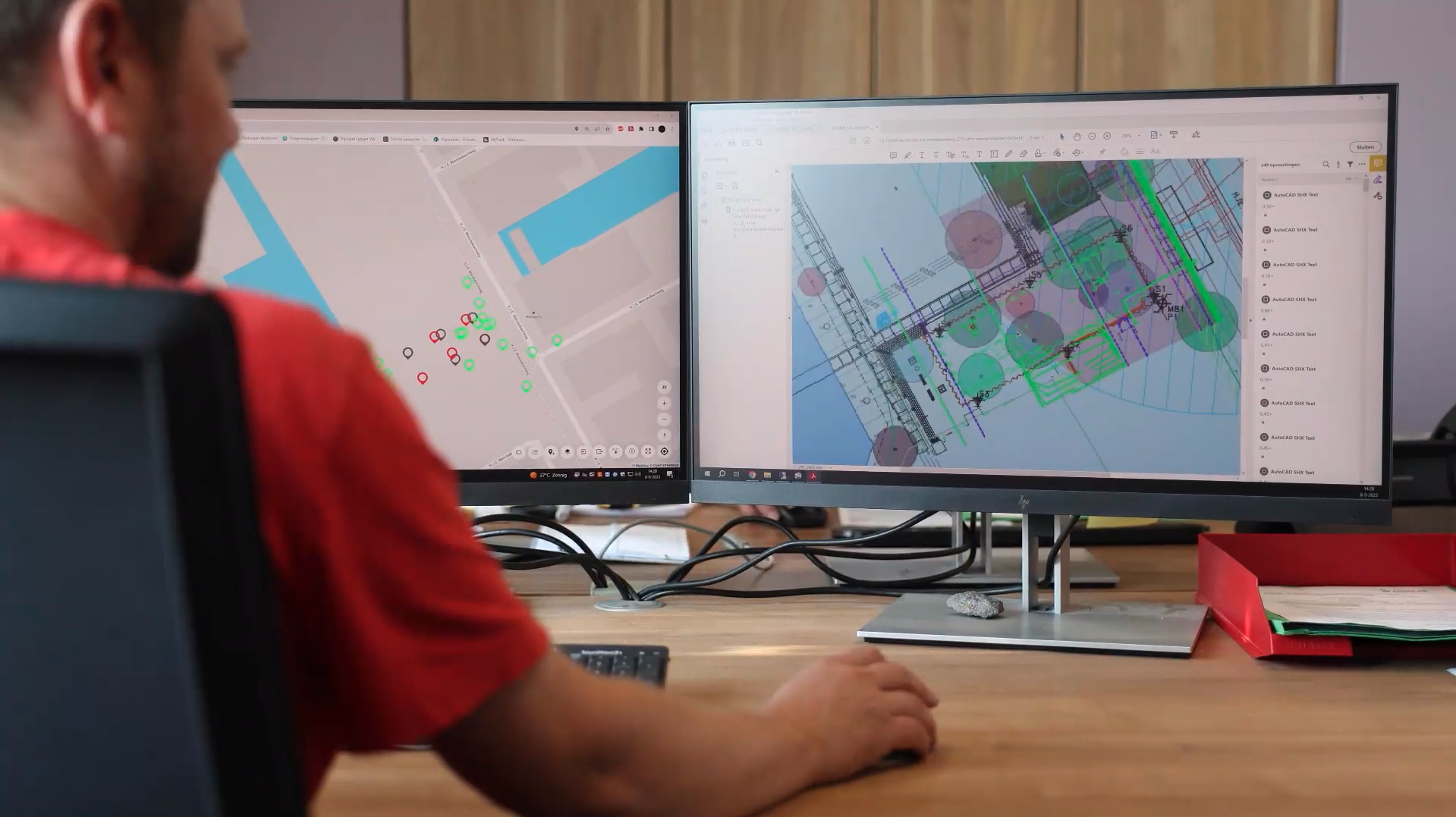
Data that has to be retyped from a field notebook into a spreadsheet is data that gets typed wrong. Cloud software that pushes field data to the office in real time — and pushes design files back down to the pole — removes that step entirely.



Top picks for road construction crews
Samsung Galaxy Tab Active 5 Pro — the field tablet pick
At €600, this is the tablet most crews pair with a marXact RTK GNSS receiver for daily stakeout in 2026. It's built for outdoor use rather than an office slate retrofitted for the field, which is the difference between a tablet that survives a season and one that doesn't. Verdict: Buy — Samsung Galaxy Tab Active 5 Pro.
180cm Telescopic Survey Pole — the setup speed pick
This pole extends to 180cm and collapses for transport, which matters when a crew moves position two or three times a week on a road job. At €300, it's the pole most foremen carry because it goes from truck bed to stakeout in under a minute. Verdict: Buy — 180cm Telescopic Survey Pole.
UNI-Machine — the machine control pick
UNI-Machine turns the same GNSS position feeding your stakeout into live guidance in the cab, so an excavator operator sees cut and fill in real time on base layer and subgrade work. A short cabin-plus-GNSS installation runs €1,000; a full installation with sensors runs €2,000. Verdict: Buy for crews running their own machines — UNI-Machine.
UNI-Cloud — the office handoff pick
UNI-Cloud moves field data to the office in real time and pushes job files back down to the pole, which is the piece that stops a foreman from retyping coordinates by hand. It runs at €0. Verdict: Buy — UNI-Cloud.
Slim Case with Pole Clip-On — the durability pick
At €250, this case is built to survive being thrown in a truck bed between sites, with a pole clip-on that skips the extra strap or bracket most crews lose within a month. Verdict: Consider if your current case is already falling apart — Slim Case with Pole Clip-On.
What to avoid
- Consumer tablets retrofitted with a rugged case. A case bolted onto an office tablet is not the same as hardware built for dust and drops from the factory — the seams fail first.
- Base-station-only receivers on a moving job. If the correction source requires setting up and babysitting your own base every time the crew relocates, you've bought a survey crew's workflow, not a road crew's.
- Field software priced for surveyors, built for surveyors. If the app assumes coordinate geometry knowledge or a training course before day one, it wasn't built for a foreman.
“If the field app needs a training course before day one, it wasn't built for a road crew.”
Verdict comparison table
| Product | Price | Best for | Verdict |
|---|---|---|---|
| Samsung Galaxy Tab Active 5 Pro | €600 | Daily rugged field data collection | Buy |
| 180cm Telescopic Survey Pole | €300 | Crews relocating stakeout points weekly | Buy |
| UNI-Machine | €1,000-€2,000 installed | Crews running their own excavator | Buy |
| UNI-Cloud | €0 | Field-to-office data handoff | Buy |
| Slim Case with Pole Clip-On | €250 | Replacing a failing case | Consider |
FAQ
What's the best RTK GNSS receiver for road construction crews in 2026?
For most road crews in 2026, the receiver matters less than the kit around it: a rugged tablet like the Samsung Galaxy Tab Active 5 Pro, a telescopic pole rated for daily relocation, and cloud software that skips manual data entry. The receiver only earns its price if that ecosystem is built for a non-surveyor.
Is an RTK GNSS receiver accurate enough for road base layer stakeout?
Yes, centimetre-level RTK positioning is accurate enough for base layer, curb and drainage stakeout on a road job. The bigger risk is the fix drifting under vibration from nearby compaction equipment, not the underlying accuracy spec.
Do you need a licensed surveyor to run an RTK GNSS receiver?
No, modern field software is built for site workers without a surveying licence. The requirement is a field app a non-surveyor can learn in about an hour, not a certification.
How much does it cost to hire a surveyor instead of buying an RTK GNSS receiver?
A surveyor call-out costs €400 to €600 a day, excluding travel and scheduling delays. A crew doing stakeout twice a week pays that back inside a month by setting out in-house.
Can an RTK GNSS receiver connect to an excavator for machine control?
Yes, a machine control package like UNI-Machine feeds the same GNSS position into the cab as live cut-and-fill guidance. A short installation runs €1,000; a full installation with sensors runs €2,000.
What tablet works best with an RTK GNSS receiver on a road site?
A rugged, outdoor-rated tablet works best, not an office tablet in a case. The Samsung Galaxy Tab Active 5 Pro at €600 is the option most crews pair with a field receiver for daily use.
How long does an RTK GNSS receiver battery last on a full shift?
A properly speced receiver and tablet combination should run a full workday on one charge. If your current setup needs a mid-shift swap, that's a sign it wasn't built for daily crew use.
Does an RTK GNSS receiver need its own base station?
No, receivers that use NTRIP network corrections skip the base station entirely, getting a fix over a mobile connection instead. That matters on road jobs where the crew relocates every few days.
One last thing
The number that matters more than any spec sheet: a surveyor costs €400 to €600 a day, and a road crew that sets out its own base layer twice a week pays that back inside a month. In 2026, that math is why more road construction crews are buying the receiver instead of the day rate.