
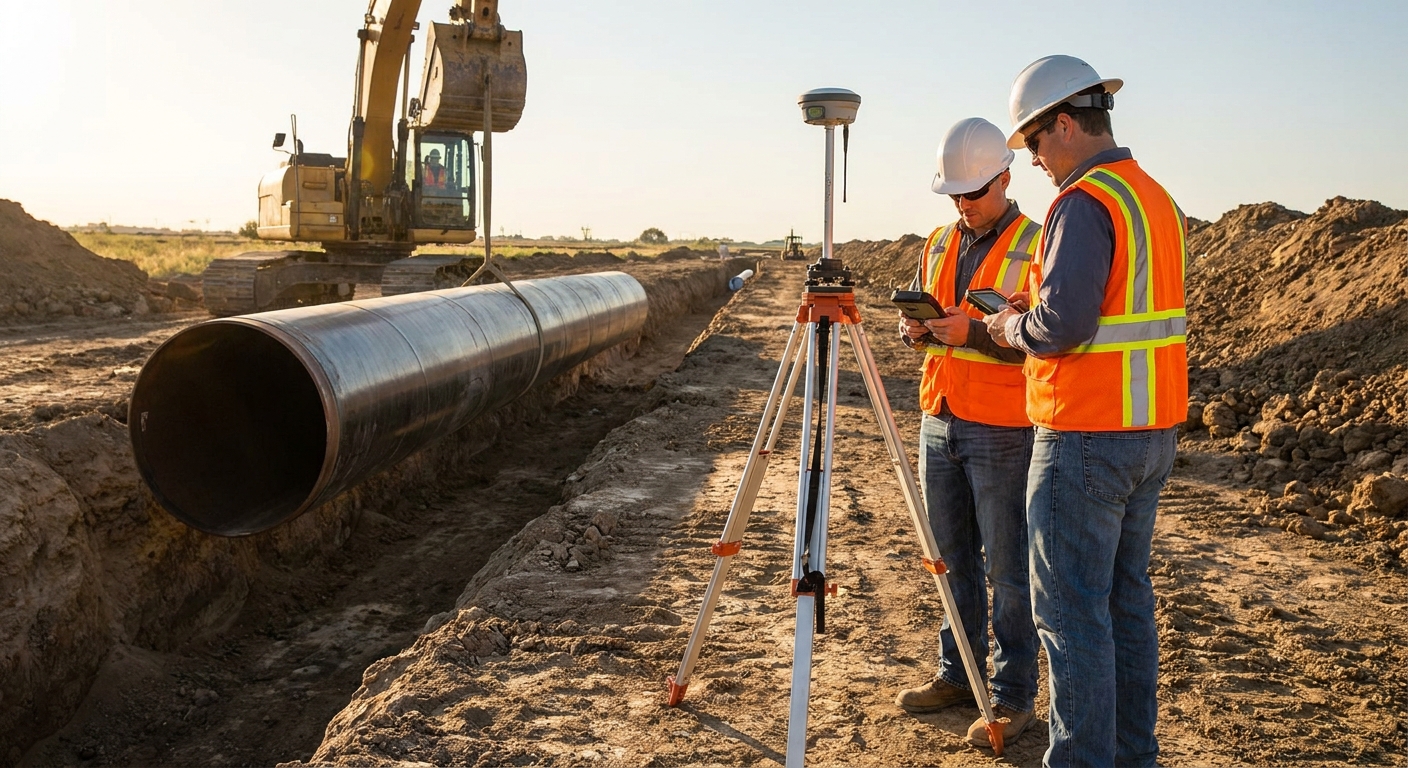
Pipeline crews staking out trench lines, tie-ins and valve pits rarely have a surveyor on call every day, and an RTK GNSS receiver for pipeline installation puts that centimetre-accurate stakeout directly in the hands of whoever is running the trencher or excavator.
- An RTK GNSS receiver for pipeline installation lets a foreman stake trench lines and tie-ins without booking a surveyor.
- The 180cm Telescopic Survey Pole is the depth pick for trench and manhole work in 2026 — Buy.
- Surveyor day rates run 400 to 600 euro in 2026, so one field kit often pays back within a few linear kilometres of pipe.
- Samsung Galaxy Tab Active 5 Pro handles mud, dust and cold on long linear alignments — Buy.
- UNI-Cloud moves trench as-built data to the office the same day, no separate export step needed.
Why this matters
Hiring a licensed surveyor for trench stakeout and tie-in checks costs 400 to 600 euro per day in 2026, excluding travel and mobilisation. On a linear pipeline job with dozens of tie-ins and inspection points spread over kilometres, that adds up fast, and it puts a scheduling bottleneck between the trencher and the next cut.
More than 1,000 companies across 40 countries already run field crews on RTK GNSS receivers instead, and site teams using this approach have logged over 10 million measured objects to centimetre accuracy. Pipeline work is one of the more straightforward use cases: long, mostly linear alignments with clear sky view most of the day, which is exactly where GNSS RTK performs best.
The question isn't whether RTK GNSS works for pipeline installation — it's which receiver, pole and controller combination survives mud, cold and a crew that isn't trained as surveyors. marXact's GNSS lineup is built around that second question.
Who this is for
This guide is for pipeline foremen, civil contractors and utility installation crews who need trench inverts, valve pit locations and tie-in points staked and documented without waiting on a survey subcontractor. If your crew already runs an excavator with machine control or wants to add it, the same GNSS setup covers both stakeout and grade checking.
What to look for in an RTK GNSS receiver for pipeline installation
Vertical accuracy at trench invert level
Pipeline grade is a vertical accuracy problem first. A receiver that holds centimetre-level vertical fix matters more here than horizontal precision, because invert elevation errors compound over long runs and show up as low spots that hold water.
Field ruggedness against mud, dust and cold
Trench sites chew through consumer electronics. Any receiver, tablet or pole that isn't rated for dust, mud spray and temperature swings will fail mid-job, and a cracked screen or corroded connector on a linear site means a drive back to the yard, not a quick fix.
Pole reach for deep trench and manhole work
Standard 2-metre poles force the operator to climb into the trench for every invert check. A telescopic pole that extends further lets one person shoot a point from the surface, which is the whole point of putting GNSS in the crew's hands instead of a surveyor's.
Fast setup and breakdown across long linear runs
Pipeline alignments mean moving the rover dozens of times a day. A quick-release mechanism between pole and receiver saves seconds per move that add up to real time across a shift, and it's the difference between a crew that uses the kit constantly and one that leaves it in the truck.
Cloud sync for as-built pipeline records
Regulators and clients want as-built documentation for buried infrastructure. A receiver that pushes points straight to a cloud platform the same day beats exporting files at the end of the week, especially when the office needs to check grade before the next section gets backfilled.



Top picks for pipeline installation crews
180cm Telescopic Survey Pole — the depth specialist. Extends well past standard 2-metre poles, which means the operator shoots invert points from the trench edge instead of climbing down for every check. At 300 euro it's the single highest-impact accessory on a deep-trench job. Buy.
Slim Case with Pole Clip-On — the rugged carry. Built to take daily fieldwork abuse, at 250 euro it protects the receiver and controller between moves on a site where equipment gets thrown in and out of a truck bed a dozen times a day. Buy.
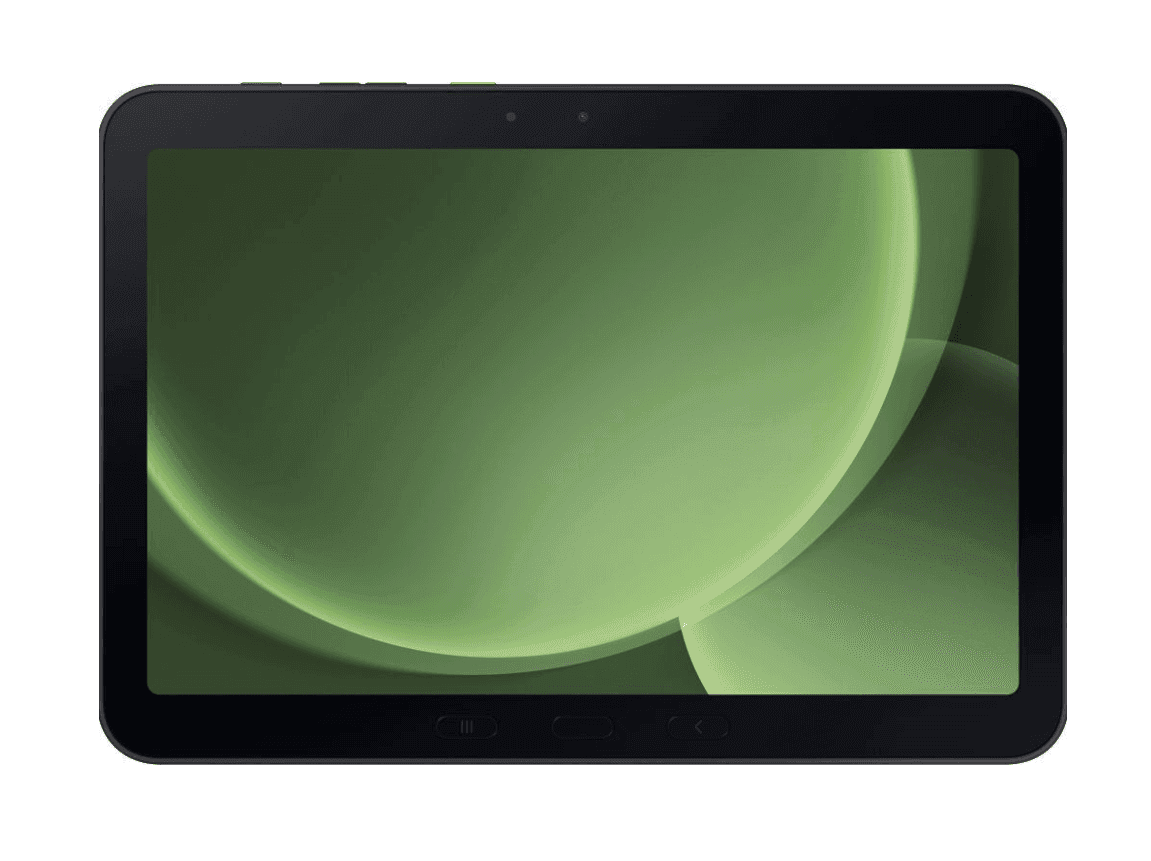
Samsung Galaxy Tab Active 5 Pro — the field controller. A 600-euro tablet rated for the mud, dust and cold that kill consumer devices within a season on linear pipeline sites. Buy.
Quick Release — the setup-speed accessory. At 150 euro it cuts pole-to-receiver mounting to a lock-and-go motion, which matters most on crews moving the rover 40+ times a shift. Consider if your crew already has quick disconnects elsewhere in the kit.
UNI-Cloud — the documentation layer. Moves trench point data to the office in real time at no separate hardware cost, so grade gets checked before backfill instead of after. Buy if as-built documentation is part of the contract.
What to avoid
- Consumer-grade tablets without an IP rating — they look identical to rugged models in a spec sheet but fail after one season of trench dust and rain.
- Poles under 2 metres for trench and manhole work — they force the crew back into exactly the manual, slow workflow the receiver was supposed to replace.
- Fixed pole-to-receiver mounts on long linear jobs — without a quick-release, every move costs the crew time it doesn't get back.
Verdict comparison
| Pick | Fixes | Price | Verdict |
|---|---|---|---|
| 180cm Telescopic Survey Pole | Trench and manhole depth reach | \u20ac300 | Buy |
| Slim Case with Pole Clip-On | Rugged daily transport | \u20ac250 | Buy |
| Samsung Galaxy Tab Active 5 Pro | Field-rated controller | \u20ac600 | Buy |
| Quick Release | Setup and breakdown speed | \u20ac150 | Consider |
| UNI-Cloud | Same-day as-built sync | \u20ac0 | Buy |
FAQ
What's the best RTK GNSS receiver setup for pipeline installation in 2026?
A pipeline crew needs a rugged rover with a telescopic pole for trench depth, a field-rated tablet, and cloud sync for as-built records. The 180cm Telescopic Survey Pole and Samsung Galaxy Tab Active 5 Pro cover the depth and controller needs on most trench jobs.
Is RTK GNSS accurate enough for trench invert grades?
Yes, RTK GNSS holds centimetre-level vertical accuracy under open sky, which covers invert grade checks on most pipeline alignments. Accuracy drops near dense tree cover or tall structures that block satellite signal.
How much does hiring a surveyor cost compared to buying an RTK GNSS receiver?
A licensed surveyor costs 400 to 600 euro per day in 2026, not counting mobilisation. On a multi-week pipeline job with daily stakeout needs, an owned RTK GNSS receiver often pays back within a few linear kilometres of pipe.
Can pipeline crews use RTK GNSS without survey training?
Yes, that's the point of a field-ready GNSS setup: an operator with no survey background can stake trench lines and tie-ins directly. More than 1,000 companies across 40 countries already run non-surveyor crews this way.
What accessories does a pipeline crew need with an RTK GNSS receiver?
A telescopic pole for trench depth, a rugged case, a field-rated tablet, and a quick-release mount cover most pipeline stakeout needs. Cloud software to sync as-built points is the fifth piece most crews add.
How long does RTK GNSS setup take on a linear pipeline site?
Initial fix typically takes under a minute once the rover has sky view. A quick-release pole mount cuts the time spent moving the rover between points across a long alignment.
Does RTK GNSS work near excavators and trenchers?
Yes, GNSS receivers work fine near heavy machinery as long as the antenna has clear sky view above the equipment. Machine control kits mount the same GNSS technology directly on the excavator boom for grade checking during digging.
What's the difference between a survey-grade pole and a standard one for pipeline work?
A survey-grade telescopic pole extends further and locks rigid at full extension, which matters for reaching trench inverts without the pole flexing and throwing off the reading. A 180cm reach covers most trench and manhole depths encountered on pipeline sites.
One last thing
Crews that switch from a fixed-length pole to the 180cm Telescopic Survey Pole almost always underestimate how much time they were losing climbing in and out of trenches for invert checks — it's usually the single accessory change that makes an RTK GNSS receiver for pipeline installation actually get used every day instead of sitting in the truck.