
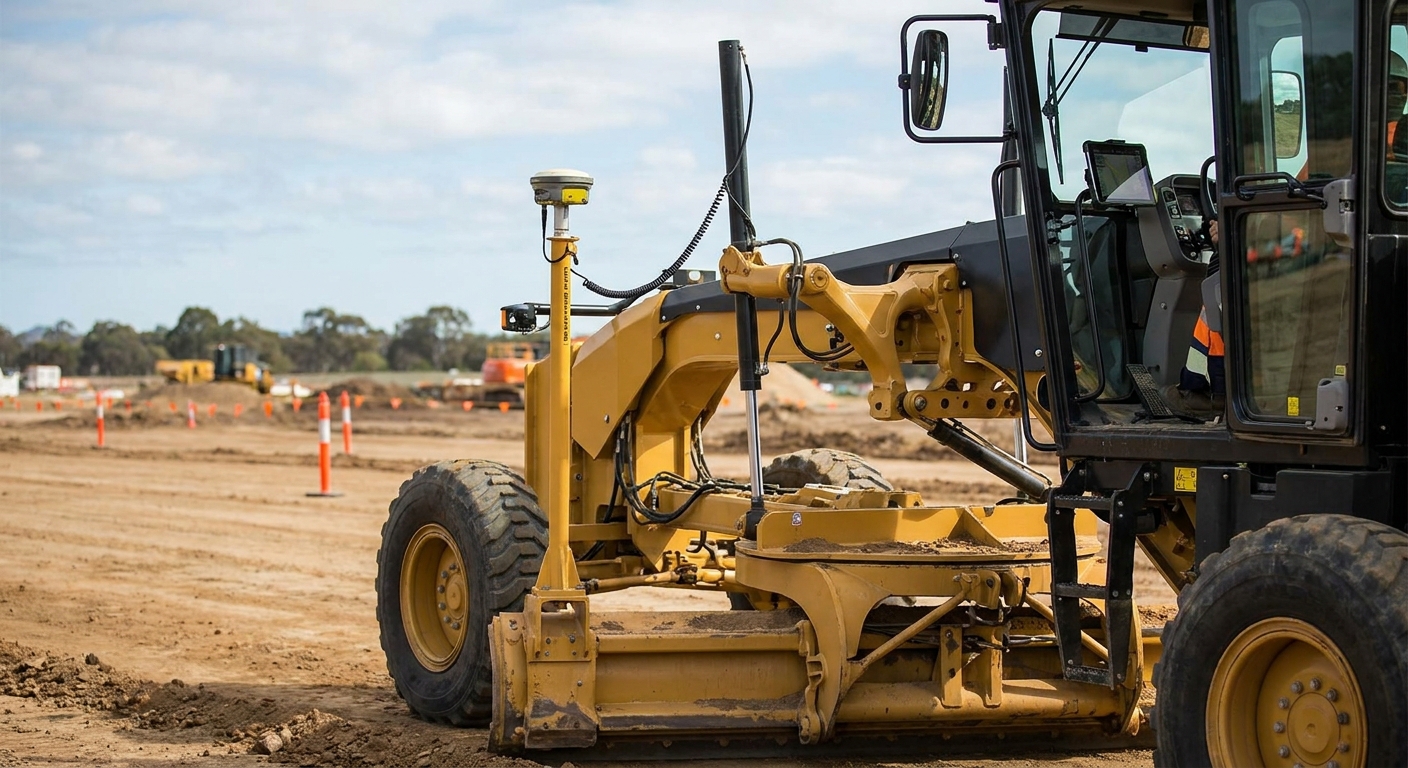
3D GPS machine control for graders puts a GNSS receiver and cab display directly on the blade, so an operator cuts to a digital design surface without stakes, string lines, or a surveyor standing next to the machine.
- 3D GPS machine control for graders replaces stakes and string lines with a cab display tied to live GNSS positioning.
- UNI-Machine is the marXact platform pick for grading crews running more than one job a month - Buy.
- UNI-Cloud moves design files to the machine and results back in real time - Buy if you push weekly revisions.
- Full Machine Installation runs €2,000 versus €1,000 for a Short install - pick based on existing sensors.
- Excavator sensor kits (boom, stick, bucket) do nothing on a grader with no boom - Skip them.
Why this matters
Grading crews lose hours every week to stakeout: a surveyor sets grade stakes, the crew cuts to them, then someone checks the cut and resets stakes for the next pass. A surveyor costs \u20ac400-600 per day, and that's before travel or a second visit when the design changes mid-job. 3D GPS machine control for graders removes the stakes entirely - the blade position updates against the design file in real time, and the operator makes the call without waiting on a site visit.
marXact runs this kind of setup for more than 1,000 companies across 40 countries, using the same GNSS receiver hardware that surveyors use for stakeout, now mounted on the machine instead of a pole. See how a marXact GNSS receiver ties into a grader's cab display before you spec a system for your crew.
In 2026, the gap between a 2D machine control system (slope only, no elevation) and a full 3D GPS setup (elevation and position, tied to a design surface) is the difference between guessing at grade and cutting to it on the first pass.
Who this is for
This guide is for grading foremen and civil contractors running graders on road, pad, or site-prep jobs who don't have a surveyor on staff and don't want to book one for every stakeout. If your crew re-stakes more than once per job, or you're paying a surveyor's day rate just to check cut depth, 3D GPS machine control for graders pays for itself faster than a 2D slope-only system - and it does it without adding a specialist to the payroll.
What to look for in 3D GPS machine control for graders
marXact's approach to 3D GPS machine control for graders starts with accuracy at the blade, not the antenna, and works down from there. Run each of these checks before you commit to a system.
Centimetre accuracy on the blade, not just the mast
A GNSS receiver reading centimetre accuracy at the antenna only matters if that number survives the trip down to the cutting edge. Mast height, blade tilt, and machine vibration all eat into accuracy if the sensor stack isn't built for cab conditions. Confirm the stated accuracy is measured at the blade before you buy.
A cab display an operator can read at speed
The display turns GNSS data into a decision the operator makes without slowing down. If reading cut/fill takes more than a glance, the operator compensates by working slower - which cancels out the reason for removing the surveyor in the first place. Look for one number, not a menu stack.
Real-time data flow between field and office
Design files change mid-job more often than anyone plans for. A system that pushes updated design surfaces to the machine and pulls as-built data back to the office in real time avoids the common problem of a crew grading to yesterday's file.
Non-surveyor setup and daily operation
The economic case for 3D GPS machine control for graders rests on skipping the specialist entirely. If the system still needs a survey background to calibrate or troubleshoot on-site, you haven't removed the \u20ac400-600/day cost - you've just moved it around.
Components matched to a grader, not an excavator
Machine control catalogs mix components for excavators (boom, stick, bucket, tiltrotator sensors) with components for graders (mast-mounted GNSS, cab display, receiver). A grader has no boom or bucket - sensor kits built for excavator arms won't do anything on a blade machine.
Installation and training matched to crew experience
A crew running its first 3D GPS system benefits from an on-location session before the first job, not a manual left in the cab. Crews already running GNSS survey gear can usually self-install with the base kit and skip formal training.


Top picks
UNI-Machine - the platform pick This is the marXact machine control platform: a GNSS receiver feeding a cab display, built to hold centimetre accuracy at the blade rather than just at the antenna. It's configured per machine, so you select a setup matched to your grader instead of buying excavator-specific sensor packages you'll never use. Buy for any crew running more than one grading job a month.
UNI-Machine Training on location - the onboarding pick An on-location session, delivered in the Netherlands, that walks through everything on UNI-Machine before the crew touches a live job. One session covers setup, daily calibration checks, and the troubleshooting an operator can do without calling a surveyor. Consider it if this is the crew's first 3D GPS machine control system - Skip it if the crew already runs marXact GNSS survey gear.
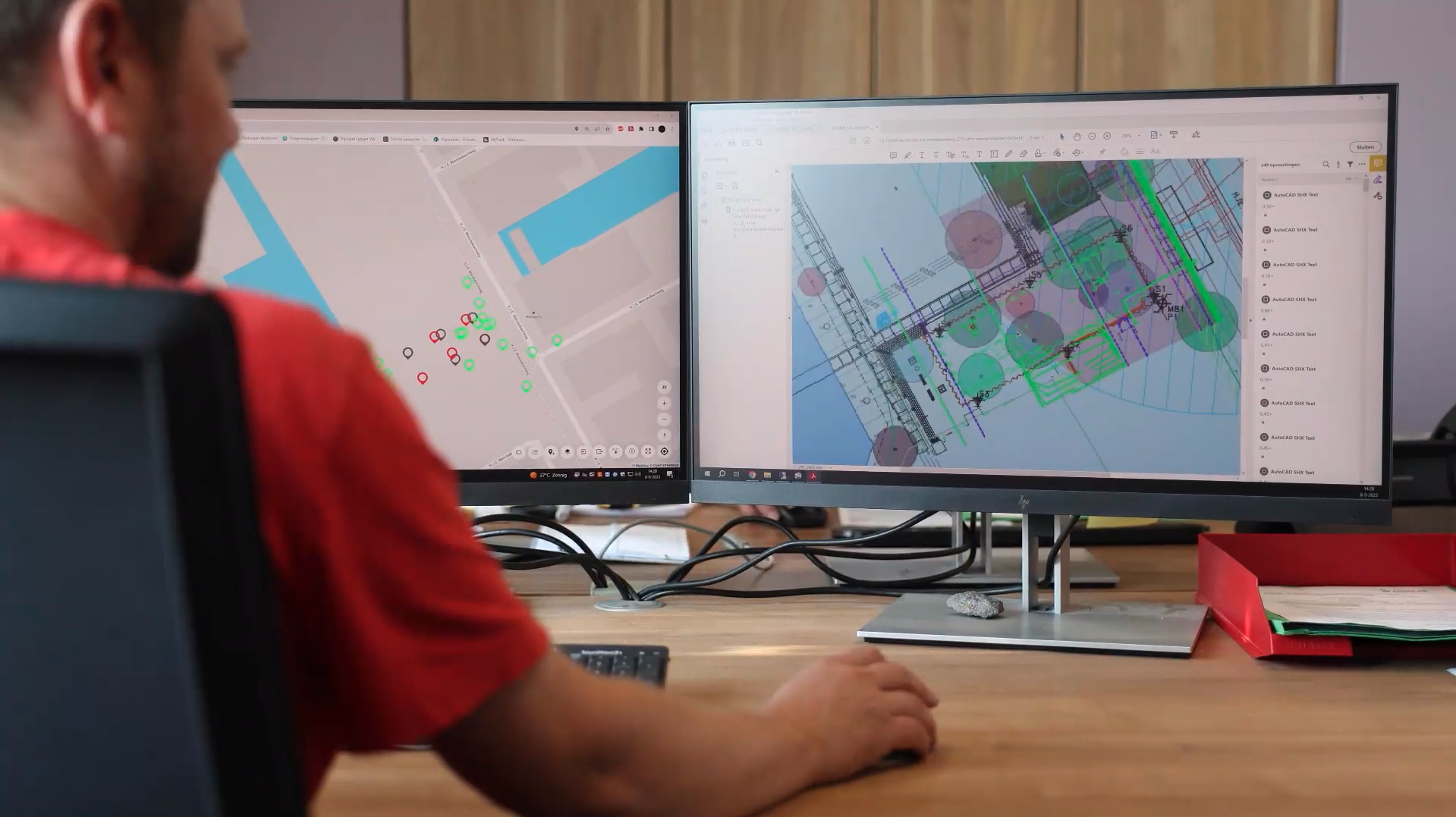
UNI-Cloud - the data pick UNI-Cloud moves job data between the field and the office in real time, in both directions - prepare a job at the desk, push it to the machine, then pull as-built results back without a USB stick. It's the piece that stops a crew from grading to an outdated design file. Buy if you push more than a handful of design revisions a week; the base tier costs nothing to run.
Short vs Full Machine Installation - the install pick Short Machine Installation covers cabin and GNSS for \u20ac1,000; Full Machine Installation adds the sensor package for \u20ac2,000 in 2026 pricing. If you're outfitting a blade machine from scratch, the full install saves a second site visit later. Buy Full for a new machine; Consider Short if the grader already carries compatible sensors from a prior setup.
What to avoid
- Excavator-specific sensor kits. Boom, stick, bucket, and tiltrotator sensor packages are built for excavator arms - a grader has no boom, so none of that hardware does anything for a blade setup.
- 2D slope-only systems sold as "machine control." They hold cross-slope but not elevation against a 3D design surface, so you're still checking cut depth by hand.
- Consumer tablets without a rugged mount. A tablet not secured to a cab mount and rated for vibration and dust drops signal or cracks mid-shift - the display only helps if it survives the job.
Verdict comparison
Here's how a full 3D GPS machine control setup for graders stacks up against the traditional stakeout approach across the criteria that matter most.
| Criterion | UNI-Machine platform | UNI-Cloud | Hiring a surveyor |
|---|---|---|---|
| Centimetre accuracy at the blade | Yes | N/A (data layer) | Yes, on-site only |
| Non-surveyor operable | Yes | Yes | No - specialist required |
| Cost structure | One-time hardware + software | Free base tier | \u20ac400-600 per day |
| Design file turnaround | Real-time in cab | Real-time upload/download | Delayed, office-bound |
FAQ
What does 3D GPS machine control cost for a grader in 2026?
A base setup like the UNI-Machine platform costs per-machine hardware and software, with a Short Machine Installation (cabin + GNSS) priced at €1,000 and a Full Machine Installation (cabin + GNSS + sensors) at €2,000 in 2026. Add €500 for on-location training if it's the crew's first system.
Is 3D GPS machine control accurate enough for finish grading?
Yes - systems built around a GNSS receiver reading centimetre accuracy at the cutting edge handle finish grading, not just rough cut. Confirm the accuracy spec is measured at the blade, not just at the antenna.
Do I need a surveyor to run 3D machine control on a grader?
No, that's the point of the system - a non-surveyor operator sets it up and runs it day to day. A surveyor still costs €400-600 per day to hire, and 3D GPS machine control replaces most of the site visits that cost covers.
Can 3D GPS machine control retrofit an older grader?
In most cases yes, through a Short or Full Machine Installation package that fits the GNSS receiver and cab display to the existing machine. Compatibility depends on cab and mast mounting points, so confirm the machine model before ordering.
What's the difference between 2D and 3D machine control on a grader?
2D machine control holds cross-slope only and still needs manual grade checks; 3D GPS machine control ties the blade to a full design surface for both slope and elevation. In 2026, most new grading specs call for 3D because it removes the manual check step entirely.
How does UNI-Cloud fit into a grader machine control setup?
UNI-Cloud moves job design files from the office to the machine and pulls as-built data back, both in real time. It keeps a grader cutting to the current design file instead of an outdated one.
How long does it take to train an operator on 3D GPS machine control?
A single on-location training session, delivered in the Netherlands, covers setup, daily checks, and basic troubleshooting for UNI-Machine. Crews with existing GNSS survey experience often skip formal training and self-install.
Is 3D GPS machine control worth it for small grading crews?
Yes, if the crew re-stakes more than once per job or currently pays a surveyor's day rate to check cut depth. The free base tier of UNI-Cloud plus a Short Machine Installation at €1,000 keeps the entry cost lower than a season of surveyor visits.
One last thing
Crews adopting 3D GPS machine control for graders for the first time in 2026 tend to over-buy sensors and under-buy training - book the on-location session before the hardware ships, not after the first stakeout goes wrong. More than 1,000 companies across 40 countries already run a marXact machine control setup instead of booking a surveyor's day rate for every grade check.